Blue-Violet Iris Interior

Thursday, June 20, 2013

Backyard Birding

Abundant moss crop.
Several years ago, after struggling for more than two decades to grow a lawn in the dry shade beneath the conifers in our backyard and producing only moss in abundance, my family decided to start working with nature instead of against it. Out went the lawn, in went a mix of shrubs and ferns, and the moss was allowed to flourish freely at last. One thing we told the landscape designer when putting together the plan for our new backyard was that we wanted to attract birds in general and hummingbirds in particular. It's only been a few short years, but the reconfiguring of the dank and gloomy space below the conifers has been reborn as a woodland paradise for birds on our suburban backyard lot.

This birdbath is the focal point of our yard.

Vine maples shelter the far corners of the yard.

The view toward the back gate, where heavenly bamboo (nandina) and a massive rhododendron flourish.

A group of Douglas-firs rises high above our yard and those adjacent to us.

A song sparrow at Mr. Gorgeous' house.
I like birds. This should be no big surprise, since I like all animals, but I like how birds are so good at doing whatever it is that they do within their niche. I also like how easily they can enter our human spaces and live alongside us in a way larger animals can't. I like noticing the difference between the birds that can be found at Mr. Gorgeous' house, just a few miles away, and the ones that can here. One thing that makes me happy is that even though I live in a suburban development, enough of the native conifers have been left behind that we get birds found, according to the bird book, in "coniferous forest," unlike many of the birds at Mr. Gorgeous' house, which attracts birds more common to "hedgerows," "wood margins," and "suburbs." I also like that we attract birds solely on the strength of our plants and our birdbaths; feeders, in our experience, inevitably attract rats. But despite not putting out seed, the number and variety of birds that visit our yard year round has boomed. (Please note that you can--and should--click on any of these photos to enlarge them.)


One of the things that makes our yard to attractive to birds is the amount of cover it supplies.

Birds of all kinds take shelter in the cedar trees around the birdbath to wait their turn and then preen their feathers when they're done.

Rather than picking up fallen leaves in autumn, we use a blower to distribute them around the unplanted margins of the yard. These heaps of leaves are a very popular wintertime hunting ground for many birds! 

The mixture of cover and open spaces, of moss and duff, attracts multiple kinds of birds. 

We've planted seven Oregon grape bushes (mahonias) that bloom in winter,
much to the delight of the hummingbirds.

The resulting berries that ripen in early summer provide a feast for birds like the robins.


In the summer, the resplendent yellow wax bell adds beauty to the yard and food for the hummers.

We augment the hardy fuchsias, wax bells, mahonias, and other hummingbird-friendly plants with a profusion of summertime annuals that we distribute in pots on the back deck.

The single most common visitor to our yard is the Oregon junco. In winter, they come in great flocks, often at the same time every day. During the breeding season, they arrive in pairs. There is seldom a time when there isn't a junco in the yard or at least in earshot! Like most of the birds we see, they are relatively drab in appearance, but they are spirited, social little birds that hop over the moss hunting for insects, squabble over who gets to use which birdbath with whom, and flit between the sheltering trees with sudden flashes of their dramatic black and white tail feathers.

An Oregon junco.

In addition to the pedestal birdbath that is the focal point of our yard, we also have this dish on the deck that is a popular bathing spot for small birds like the juncos.

A male junco pauses during his bath to fluff out all his feathers.

I never get tired of watching birds bathe!


Papa Junco watching over his baby.
A few weeks ago, I was treated to an unexpected surprise. My dog spooked a little rustling something in the heart of a thick shrub and out ran, to my utter delight, a baby junco! A tiny scrap of a thing, it was tremendously fast and surprisingly well-camouflaged. The dog, fortunately, didn't notice the sprinting little morsel. With the help of my 100 mm lens, I was able to get the picture below without getting too close. The parents were always in the trees above it or on the ground nearby, making a constant "chk chk chk" sound. At first I was concerned that this was a nestling that had fallen from its nest in a windstorm two days before, but after reading up on junco breeding behavior, I discovered that juncos typically nest on or near the ground (perhaps under our deck) and that the nestlings leave the nest four days before they fledge. Indeed, when I saw the baby junco the next day, it had already sprouted new, more mature feathers. I took the dog out on a leash for some days afterward, but didn't see it again for several weeks. I was delighted, then, when once again there was a rustling in the same shrub as the dog and I walked by and the little fledgling flitted up into the vine maple overhead! Once again, all the adult juncos rushed to the scene to look after the little one, CHK! CHK! CHK!-ing with alarm, and one of the adult juncos positioned himself on the branch between me and the baby. I had my camera with me, so I was able to grab a shot and then leave them in peace. The dog is once again going out on a leash (she finally noticed the rustle in the bushes and tried to pounce) because we want this little junco to grow up and be part of the big, bustling flock visiting our yard this winter!

Baby Oregon junco!

Oregon junco fledgling.

Chickadees are another small bird that abounds year-round, flitting from conifer to conifer, dangling like animated Christmas ornaments, constantly chirping to one another, and regularly descending on the yard, individually during the breeding season and en masse in the winter, to use the birdbath and explore the culinary options of the lower reaches. We see three different chickadee varieties: the traditional black-capped chickadee, the chestnut-backed chickadee, and, very occasionally, the mountain chickadee. They all flock together and on one memorable occasion, we had three different kinds of chickadees in the birdbath at the same time! Chestnut-backed chickadees are the most abundant of the three. They are even more petite than the black-capped variety and, as their name implies, have lovely reddish-brown backs.

A chestnut-backed chickadee.

They may be small, but chickadees can really fling water around during bath time!

Another frequent small bird visitor is the red-breasted nuthatch. During the winter, they, too, join the large flock of mixed birds that visits our yard daily. During the breeding season, they will show up solo. Very small, they cling to the bark of the conifers, crawling up, down, and around to find insects.

A rather moist red-breasted nuthatch with its beautiful blue-gray back and distinctive eye stripe.

This is the best action shot out of all the bird photos I took for this blogpost--I highly recommend clicking on this photo to enlarge it to better see the detail!

Most of the other small birds that visit the yard, especially the warblers, do so primarily in winter, though I did see a couple lemon-lime Wilson's warblers with their little black skullcaps in the yard the other day. These birds include bushtits, golden-crowned kinglets, ruby-crowned kinglets, Townsend's warblers, and black-throated blue warblers. A few other smaller birds that visit the yard but don't travel with larger flocks are fox sparrows, house wrens, winter wrens, and Bewick's wrens.

When it comes to larger birds, one of the most frequently seen, especially in the spring and summer, is the robin. I've long found robins rather tedious, the bird equivalent of the dandelion, and have never forgiven them for starting up their relentless territorial chirping at 3:30 in the morning. During these last few days of watching and photographing them, however, I've developed more of a fondness for them. It's hard to tell one robin from another, so I don't know if I'm seeing the same male and female pair or several different ones, but the male robin(s) tends to be much bolder. Having quickly determined I was not a threat, the male robin will no longer interrupt his bath when I come out of the house, cross the deck, and take my seat in a chair less than ten feet away. The female robin, however, is much more cautious. She has progressed to the point where she will bathe, but only after considering me for a long time and frequently breaking off her ablutions to make sure I'm still behaving myself. The robins, it should be noted, are the splashiest bathers. If the birdbath is suddenly nearly empty, it means the robins have been there! Several other thrushes we see occasionally are the nondescript-but-cool-because-they-are-rarely-seen Townsend's solitaire and one of our favorite winter-time visitors, the handsome varied thrush.

The cocky male robin.

Incoming!

The robin couple's youngster must have been sheltering in the bushes below because when this crow landed in the tree on the other side of the fence, both robins started dive-bombing it. You can see the male robin to the left coming in for another attack.

The more timid female robin. She is identified by her more subtle coloring.

Of course, if there IS a bird that is truly analogous to a weed, it's the European starling. We see a few more than we used to, but they aren't regular visitors--they seem to prefer to feed on grassy lawns and other more open expanses. One did come by while I was staking out the birdbath, much to the male robin's annoyance. They had a tiff about it. The starling emerged victorious and the robin had to wait his turn.

Look out!


I have to admit, the iridescence that seems so oily from a distance is rather striking up close.

I've long liked the raucous Steller's jays with their black crests, blue forehead stripes, black-barred blue plumage, and those screeching calls. They are extremely suspicious, though, and are therefore hard to photograph. Unless, of course, you have peanuts! Our neighbors put out peanuts for the jays and they have grown so bold as to come to the window requesting their peanut ration. If you come too close while they are grabbing and stashing their peanuts, though, they are off like a flash!

I got this picture of a jay during peanut distribution at the neighbors'.

Here's a Steller's jay hop-hop-hopping along the fence in our own yard.

Unlike a lot of people, I love crows. I love how smart they are, how quickly they learn and disseminate knowledge, how (unlike the jays) they are excellent at assessing risk, and how clever they are in solving problems. I also like their total, inky blackness. We do have one issue with the crows: they like to use our birdbath to soak food to soften it for their babies. They have gotten quite clever about it and will look into the house to see if we are watching before dropping anything in and will fly away if they see us. We got fairly strict about not letting them soak food after the time we found the partial remains of a dead rodent and Cheez-its in the birdbath, but we've relented recently because the crows are trying to be good parents and we support that. I was super thrilled this spring to see a juvenile crow (told by its clumsy behavior and blue iris) approach the birdbath with a piece of food and demonstrate that its parents had taught it well: it looked at the house to see if anyone was visible before putting the food in. (It didn't see me reclining on the couch.) Good work, crows! 

A crow drops a piece of bread in the birdbath. Being an experienced adult, it picked the morsel back up and flew away when it saw that I had seen it.

We also get a number of "fly-over" birds that enter our yard's airspace but don't necessarily land. The most dramatic of these is the bald eagle. There is a pair that I believe is based by a small lake about a mile from my house and they have flown over the yard and perched in nearby trees enough times that I feel justified in including them! Their distinctive call helps me track them when they are in the area; our yard is so surrounded by trees that it's hard to see out.

This pair is perching in a tree approximately 200 feet from the yard as the eagle flies.

I looked up while on the deck the other day and saw this Cooper's hawk circling overhead.

Tree swallows swoop and dart through and above the tops of the conifers.

While they may visit nearly as often as the chickadees and the robins, the most spectacular flier of them all, the hummingbird, never ceases to be extraordinary. We've seen black-chinned and rufous hummingbirds, but most of our hummingbird visitors are Anna's hummingbirds. While we don't put out feeders, we've planted with hummingbirds in mind, from the winter-blooming mahonias and the summer-blooming waxbell to the fuchsias, salvias, and other bright, hummingbird-friendly annuals we put in pots on the deck and patio. Our yard is popular enough in the summer that it can become contested territory. These tiny birds are quite doughty and will dive at each other with a buzz and clack in order to say who has dibs on the bounty. The winner will usually assume a discrete perch--often on one of the cedars, or perhaps in the vine maples or atop the Stewartia tree--and sing. Their screechy little songs never fail to amuse me: I think they sound like tiny singing hinges. My best hummingbird photos can be seen here, but here are a few others:

A hummingbird approaches the waxbell.

This photo was taken just days ago as a hummer explored our new batch of annuals.

What prompted me to start working on this blogpost in the first place was the sighting of new bird. I love seeing new birds and am well-versed enough with the contents of my beloved "Birds of North America" that I can usually make a quick ID. On this occasion, however, I couldn't pin the bird's identity down. I knew it was a member of the woodpecker family and that it wasn't one of our regulars--red-shafted flickers, downy woodpeckers--or the more rarely seen but utterly distinctive pileated woodpecker. I'd gotten a glimpse of one while at the stable and my mother had seen one in the yard, but our combined intelligence--red head, black and white body--didn't seem to match any of the woodpeckers native to our area. I was extremely excited, therefore, when I happened to look up from my book while reading at the kitchen table and see the bird in question in the birdbath. I had my camera next to me just in case something interesting cropped up in the yard (you don't get the photos unless you always have your camera handy) so I was able to snap half a dozen photos. By googling "woodpecker red head red chest," I was able to make the positive ID: a red-breasted sapsucker. It's unlikely that I would have been able to identify it from the bird book even with my photographs: you can see why in the photo of the book page I've included. For one, it's way down in the corner. And two, it shows the yellow-bellied northern subspecies. The ones that live here have grayish-white bellies with only the tiniest hint of yellow. I've seen and photographed the red-bellied sapsucker several times now and am extremely excited to add it to the list of birds that visit our yard!


The bird book totally let me down on this one. Thank goodness for the internet!

Hop! The red-bellied sapsucker jumps into the bath.


Splash! I like that you can see the sapsucker has covered its eye with its clear third eyelid.

You can see how this subspecies of the sapsucker has just the tiniest touch of yellow where the red of the chest meets the grayish belly.

What a handsome bird!

Speaking of handsome... I consider the red-breasted sapsucker (see above), the red-shafted flicker (which declined to be photographed for this post), the varied thrush (who is currently out of town), the hummingbirds (of course), and the rufous-sided towhees to be the most attractive birds that visit our yard. The juncos have a certain handsome, if muted, charm, but the rufous-sided towhees are downright dapper. We've had a pair that nested somewhere nearby this year--my parents witnessed the parents courting in the yard this spring--and I can hear them calling to each other all the time, but they proved very hard to photograph! My mother was lucky enough to see one of the adults feeding their fledgling on the patio right outside the kitchen window one morning, but they dipped in and out of the yard like quicksilver whenever I was outside. I spent hours sitting out in the yard with my camera at ready, silently willing one of the towhees to land in the yard long enough for me to photograph it, but I had no luck. I finally caught a lucky break: I looked out of my upstairs study window the other evening and saw that there was a towhee in the yard. I ran downstairs, grabbed my camera, and approached the glass door, trying to spot the towhee. What I saw was a robin in the birdbath, but no towhee. I had my camera set on the three-photos-per-second action setting, so when the towhee did appear, I started shooting continuously. Here's what I got:

I had grown very frustrated that the best rufous-sided towhee image I had was of this one in the cherry trees on the other side of the fence.

Therefore, I was extremely excited when the towhee hopped up on the birdbath while the robin was bathing... 

...and absolutely beside myself when my camera caught their confrontation! (The robin won.)

This post was originally going to be about identifying the sapsucker, but during the course of its writing, as I took advantage of some decent weather to stake out the birdbath and photograph the common visitors to our yard, my purpose underwent a shift. I so enjoyed photographing the birds that I think I'm going to purchase a telephoto lens. My 100 mm macro lens can produce great pictures if I'm within ten feet of the birds, but there are lots of birds, like the jays and the flickers, who won't let you come within ten feet! I've become so accustomed to the high quality of my macro images that the degraded image quality of those taken more than 10 feet away is a real frustration for me.

But the project became more than just about the photographs. During the hours I spent out in the yard, camera in hand, I found myself becoming immersed in a different world than the one I know: the world of the birds. I used my ears to follow the progress of the towhees as the pair called back and forth to each other every few seconds, to track which conifer was being explored by the chickadees, to gauge if there were any crows or jays or flickers nearby, and to identify all the sounds of the robins. I also became very enamored with the busy, gregarious juncos and was quite flattered that they seemed to become rather enamored with me. They were able to quickly determine that I meant no harm and I think they were rather intrigued by the sound of my camera shutter when shooting in action mode, a rapid click-click-click not so different from their chk-chk-chk. The male junco(s) had become increasingly bold about investigating me: one deliberately hopped across the duff toward me as it hunted until it came within about four feet. On another occasion, after his bath, the junco opted (which they never do!) to fly over to the camellia next to me to shake the water off its feathers. Again, it was no more than four feet away! I love that I've gained their trust: I consider that the ultimate compliment from a wild animal. I only hope that my dog's interest in their youngster hasn't set back our relationship!

A junco (with a bug in its beak) comes over to check me out.

There were pleasures to be observed beyond just those related to birds. I got to see a ladybug at work and photograph it eating an aphid, to take pictures of bristly caterpillars and a magpie moth and a flying insect with burgundy compound eyes. I also watched as bumblebees took the same route, one after another, to the flowering hebe by the birdbath, a route that included an impractical zigzag through one of the mahonias. I can only assume I was actually watching the results of the directional dance of bees at work, something I'd only read about. In other words, I immersed myself in the coniferous suburban backyard ecosystem. As I wrote in my last post, I love the concept of the ecosystem, but I don't often think of where I live as being one; ecosystems are out in the wild, not at home. But the backyard proves to be a full and vibrant world, equally inhabited by the birds and other critters as it is by humans.

So, in total, I've counted visits by thirty-three different birds to our yard (including, once, years ago, a merlin that caught a mouse on our back lawn). I would consider roughly twenty-five of these species to be regular visitors, at least on a seasonal basis. Over the course of four days, I photographed twelve of these species and saw several others. This is nothing compared to the senior author of the bird book, who has, it says, seen 193 species on his 2.5 acre suburban Maryland yard, but there's only a small number of species that can possibly be found in the coniferous suburbs west of the Cascade Mountains in the Pacific Northwest. I think we're doing a pretty good job of attracting most of them!

Our lush and abundant moss.

Before we redesigned our yard, we only saw crows, robins, jays, flickers, juncos, and chickadees on a semi-regular basis. Now that we are working with the moss instead of against it, our yard has turned into a bird's paradise. Wrens like to hunt in the viburnums lining the stone patio, the varied thrushes toss about the piles of fallen leaves against the fence, the flickers and towhees hunt in the open fringes of the yard, the warblers flit through the hydrangeas and the cedars, bushtits swing in chirping acrobatic troupes through the vine maples, the hummingbirds sing from the Stewartia and feed from the fuchsias, the robins gobble berries and empty the birdbath with their splashing, chickadees call to one another from the Douglas-firs, the crows stop by for a drink and maybe to soak a piece of bread, the jays jeer from the neighbors' cherry trees, a loud "kwah!" announces the arrival of the sapsucker while the sound of claws on bark indicates the presence of a downy woodpecker, the juncos hop and dart and flutter and bounce over every inch of the yard, and, high above, the chittering swallows draw cursive paths of flight across the sky. I'm excited to see and photograph ever one of them.


Don't miss my follow-up post with more photos here!


Thursday, May 30, 2013

Pond Ecology

I've been increasingly interested in using my macro lens to photograph insects and other invertebrates. Bees are one of my favorite subjects and I had a delightful time photographing snails during my last stint of looking after Sweetheart. There aren't a great many insects to be found in the vicinity of my house, which is surrounded mostly by conifers in a suburban sort of way, so I'm always on the lookout for new environments that might offer up a different range of critters for my camera. While I was taking care of Mr. Gorgeous last week, I found one.

The lower pond is utilized by a great many birds, including this mallard couple.

Mr. Gorgeous' house is located on a long, steep strip of land. To facilitate runoff, an artificial stream bed has been created on the property, along with two pools. The stream bed is dry most of the time, but the pools are permanent. I'd spent some time photographing ducks in the lower pool recently, but hadn't explored the upper one because it is surrounded by tall grass. However, on the fateful day in question, I approached the lower pool to see what there was to see and startled away two rufous-sided towhees who were bathing in the shallows. I'd like nothing better than to photograph a rufous-sided towhee in the midst of a bath, so I thought I'd approach the upper pool with more stealth in case there were any birds bathing there. I didn't find any birds. I did, however, find a great deal of green slime. And in and among that slime, a fantastic collection of freshwater aquatic invertebrate life.

This photo of the pool's algae-chocked surface looks like it was painted by Monet--that is, if Monet had painted pond scum!

Air bubbles trapped by the slime.

A riot of green.

 Scores of water striders skimmed across the pool's surface in search of prey, their feet barely dimpling the water.

A water strider.

Two different kinds of water striders, one brown, one a metallic blue.

A tiny blue fly landed on the surface of the algae to feed.

(If anyone could ID this for me, that would be awesome!)

Below the surface, danger was everywhere. Different types of water tigers, the voracious predatory larvae of diving beetles, patrolled the thickets of algae.

Diving beetle larva.

Large water tigers can even prey on small fish and tadpoles; this one, perhaps a 1/2 inch in length, would have to be content with smaller prey.

A particularly scary looking diving beetle larva!

The open stretches of the pond teemed with backswimmers in search of prey.

These amazing, agile insects hunt on their backs just below the surface, using their long hind legs like oars.

Backswimmer.

But what really intrigued me was the ability of my camera to bring the mosquito larvae bobbing just below the surface of the water into view. During my first excursion to the pond, I tried taking some photos of them from above, as I did with the other insects. I decided what I really needed was a straight-sided, narrow container that I could dip into the pool to capture the critters that would allow me to photograph them from the side. Imagine my delight when I found this:


I was so excited to happen upon the perfect container that I hustled up to the pond while still in my pajamas. It turned out to be slightly difficult to get any larvae into the container (especially since I didn't want to fall in or have my camera fall in) and then when I did get some in the container, they displayed a frustrating reluctance to rise to the surface, but eventually they did, and I was extremely pleased that my macro lens was able to bring them into focus. It's hard to comprehend the scale when looking at these images, but to the naked eye, the largest were about the size of this "l" and the smallest were virtually invisible.

You can see how the larvae compare in size to the thickness of the container's walls.

At the surface at last! That thick, blurry, horizontal line is the surface of the water. 

All four larval stages of the mosquito are nicely represented here!

Biology is cool.

While mosquito larvae are not exactly pretty, I love any unexpected look at the world that my macro lens can afford. I certainly don't like hanging out with bugs in general and adult mosquitoes in particular, but photographing them is a different matter! I never had regular access to a pond when I was growing up, so I've never had the opportunity to peer into the depths and marvel at all the strange creatures that lurk beneath the surface, especially in this algae-rich environment. If there had been fish or frogs or photogenic dragonflies to photograph, I most certainly would have pointed my camera at them, too! (I would dearly love to get some great frog photos.) I was always very taken with the idea of ecosystems when studying biology and had I gone in a scientific direction rather than an artistic one with my life, ecology would have been my chosen field. These photographs showcase a nice array of the flora and fauna of a stagnant, freshwater pond ecosystem and I'm so pleased that my camera has the ability to record the minute inhabitants of this aquatic world.


Wednesday, May 15, 2013

A Quartet of Canines

There has been extended silence on my part because I've been dividing my time between more illness than I'd like and lots and lots of dogs!

Sweetheart keeping watch while I photograph snails.

At the beginning of April, I had a nine day gig with the ever-engaging Sweetheart the German Shepherd. The weather was abysmal much of the time, with record-setting quantities of rain falling on at least one of the days, but nothing could dampen Sweetheart's spirits. She was ready to come over with a big smile on her face anytime I looked in her direction, bringing me toys, licking any part of me she could reach, and sighing blissfully when I rubbed her ears. Aside from all the rain and the resulting blahs, we had a good, uneventful time together. (Well, according to Sweetheart it was far from uneventful because it was SO EXCITING every time we went up or down the stairs, in or out of the house, or if I got on or off the couch.)

Sweetheart's house has two alarm systems!

Game, anyone?

Poor Sweetheart couldn't keep her eyes open after we took advantage of some dry weather to go for a walk. Why the silly girl wouldn't just put her head down and go to sleep, I don't know...

Snoozing at last.

Oops, you blinked!

Much of the rest of April was spent coping with another acute attack of gastroparesis, taking advantage of some sunshine, and not being able to take advantage of said sunshine because of migraines. Then, at the beginning of May, I got to spend part of the day with the ever-attractive Cutie the Great Pyrenees!

Looking noble.

Looking handsome. 

Looking elegant.

Looking like the big silly girl that she is!

The very next day after I took care of Cutie, I was off to Mr. Gorgeous' house. He always looks fantastic, hence his nickname, but Mr. Gorgeous seemed even more resplendent than usual. The only thing more gorgeous was the weather while I was at the collie's house! It was spectacularly sunny and the highs got all the way up into the mid- and upper-80's!

A breeze lifts Mr. Gorgeous' backlit ruff as he comes up the hill to see what I am doing. (Photographing ducks in the pond, in case you were also wondering.)

Mr. Gorgeous likes to be color-coordinated with his surroundings.

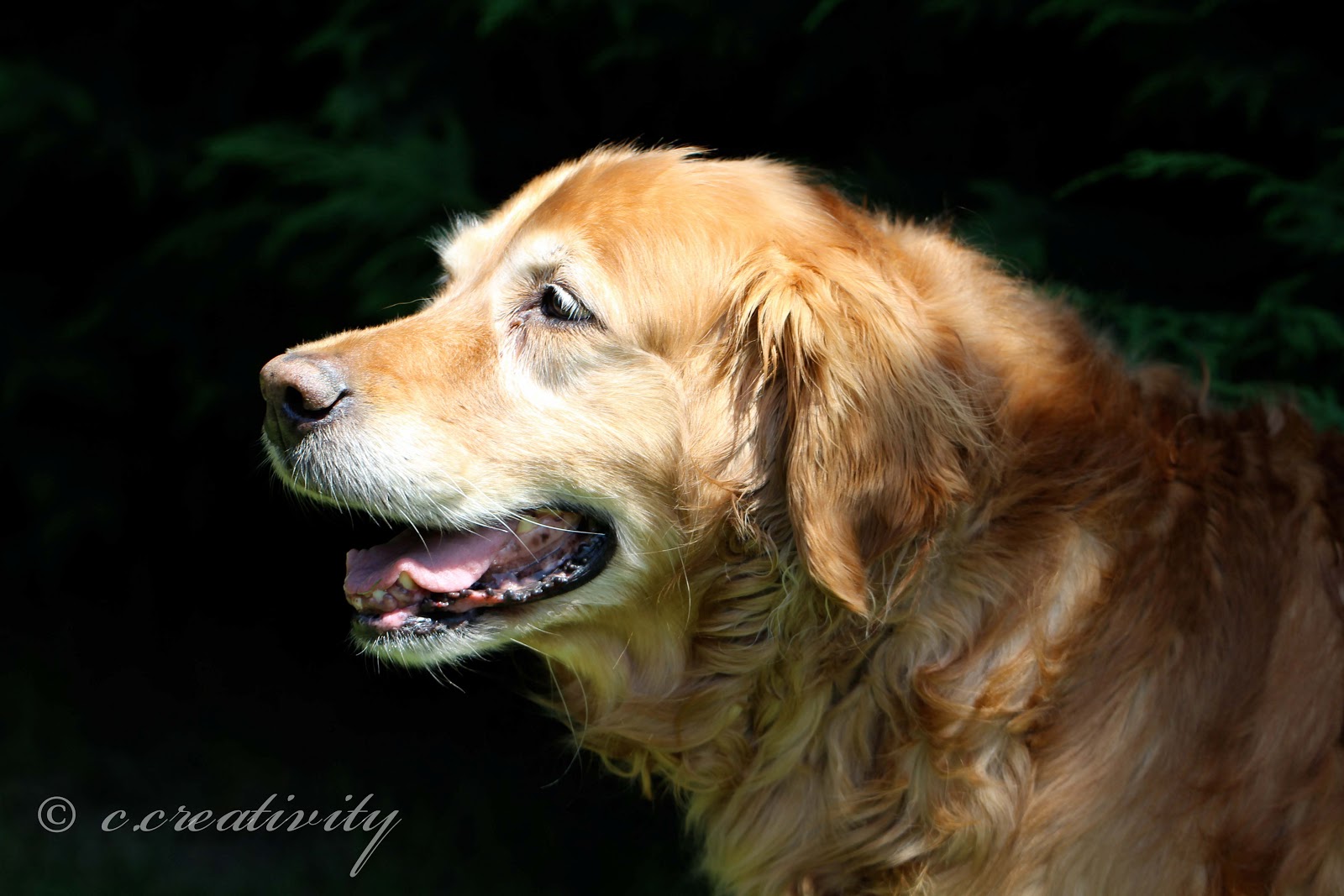
The dude always looks handsome, but he seemed particularly so this visit!

Talk about classic, iconic collie good looks!

I made him pose for this portrait with me because he'll probably have had those flowing locks shorn off for summer by the next time I see him.

Two days after I finished up with Mr. Gorgeous, I set off to spend a long weekend with Lady! I haven't looked after Lady since Mother's Day weekend last year, so she gets extra pictures. She is now all of fourteen years old and has slowed down quite a bit. Arthritis has reduced her walk to a sort of waddle and she showed minimal interest in chasing a ball, but she's still very sweet and has a funny grunt she makes when she wants my attention and enjoys her walks, though they are shorter and slower than they used to be.

"Welcome to my home!"

Lady was more interested in standing with her ball...


...or rolling on it than running after it!

The weather continued to be hot, so Lady and I spent a fair amount of time relaxing in the shade in the front yard.

Every old dog needs a good nap now and then.

Age has not lessened the sweetness of Lady's soul!

There will be more canines and fewer blogposts yet to come--I'm off to hang out with Mr. Gorgeous again at the end of this week and am already scheduled to see Lady again in early June! Sweetheart, I am saddened to report, is moving out of state this summer, but I do hope to see her again before she goes. In the meantime, my life is continues to be all about dogs, dogs, and more dogs!

And, for a bonus, check out this video I made on how to give a dog a pill using a marshmallow!

Wednesday, May 1, 2013

Watch TV

I didn't get enough sleep the other night. If I sleep through the night (which seldom happens), I can function on nine hours of sleep. But that's my absolute minimum. If I'm awake in the night, I need more than that. This is why I typically am in bed at least twelve hours out of the day. If I don't get enough sleep, migraines are an absolute guarantee.

Because I had only managed to scrape together seven hours of interrupted sleep yesterday, I found myself in damage control mode, trying to make my day go as gently as possible to void jostling my already stressed brain. The dog and I spent a pleasant three hours or so dozing and snuggling on the couch, but then she opted to abandon me in favor of basking in the sunshine streaming into the front room. I thought to join her, but found that even when not directly in the sunlight, my eyes were too light-sensitive, even without an active headache, to tolerate spending time there. I read a little bit, but found it a hard slog because my mind had lost its agility and acuity. I loathed to shut myself in my darkened bedroom where I'd spent far more time than I would like in the last couple of weeks. The time needed to be passed somehow, so I decided that I should watch TV shows on my computer for the rest of the day.

"I should watch TV."

I've become accustomed to my small and homebound way of living and strive to be unapologetic about the choices I make to cope with the disabling effects of my headaches, but every once and a while, I am struck by the absurdity of it. My life has become an inversion, in many ways, of a normal life. The refrain is usually, "I shouldn't be watching TV," and it's all about guilt. "I shouldn't be watching TV because I have all this work that needs to be done." "I shouldn't be watching TV when there are so many other constructive ways of spending my time." In my world, though, I shouldn't write, I shouldn't work on photo projects, I shouldn't read, I shouldn't cook or clean, I shouldn't exercise, I shouldn't walk the dog, I shouldn't socialize, I shouldn't leave the house, I shouldn't even get dressed in something other than pajamas. What I should do, if I know what's good for me, is to sit down and spend the next five hours watching "Law & Order."

Talk about weird.

And rather galling, too, considering that I grew up without a television and was always rather proud of the fact. I had plenty of ways of entertaining or relaxing myself and never felt the need to have one, not when there were books to be read! I'm very glad that I still don't have a television (TV commercials are hell on migraines), but I am quite grateful that I am able to stream TV shows on my computer. The twelve hours of the day must be filled somehow and when reading--once an effortless activity for me--is too much of a strain and I need to keep my physical activity to a minimum, television really comes in handy.

(For the record, I've been on a "Law & Order: Criminal Intent" kick lately because it isn't visually dramatic, the music is subtle, it isn't too heavy on the gore, and in the course of 43 minutes, unlike in my life, a resolution is reached with a criminal almost always brought to justice. Also, there are eleven seasons available to stream on Netflix, so even if I watch several a day, it will take some time before I exhaust the supply of episodes.)

In the world out there, the bright, noisy, busy, hectic, active world beyond my window that I cannot be a part of, people are trying to turn off the TV, trying to be more productive, trying to use their time constructively, trying to get more done, trying to be better, trying to be perfect. Me, I'm trying, not always with great success, not to do anything at all. And now, having spent my day's allotment of brain power in writing this, I'm off to watch TV.


The video accompanying this song is migraine-inducing, but am sharing nonetheless because I'm often reminded of Rasputina's "Watch TV" (especially the line "It makes me better") when I must resort to television to pass my days.

To follow what I do when not watching TV, visit my Facebook page!

Thursday, April 18, 2013

In the Public Eye

I'm please to report that my presence of mind three weeks ago to grab my camera and dash out to take a few pictures of the emerging tulips in some quickly melting snow has paid off!

"Look, ma, I'm in the paper!"

I'd submitted the best of the tulip shots to the "Reader's Lens" feature in the Seattle Times several weeks before, but had thought that my window of opportunity for having it selected had passed. To my delight, however, when I opened up the Travel section on Sunday morning, there was my photo! It was a timely publication, too, because I was feeling quite miserable and discouraged that morning because of an acute and painful return of my gastroparesis. While the printing quality of the newspaper couldn't capture the crisp detail of the original shot, it was still fantastic to see it there in the newspaper. An extra bonus: the paper's staff photographer who critiques the submitted photos had no criticism to offer!

Here is a nicer, crisper, clearer version of the photo.

I wasn't responsible for the art in my other instance of public exposure over the past week, but I did provide the writing and the model!

I mentioned back in my post about drawing dogs that I love the work of the lovely lady behind Blockhead Craftwerks, so when she started a new project called "Gotcha!", composed of short essays by adopters about how our special pets came into our lives, accompanied by Blockhead Craftwerks illustrations of said special pets, I naturally submitted the story of how Abbey came into my life! It's one detailed in a past post about my dog, but I like repeating it because it demonstrates why I'm such a believer in the healing power of animals. You can read the full story in the Blockhead Craftwerks "A Dog a Day" blog or see all the stories on BC's Facebook page.

Abbey © 2013 Blockhead Craftwerks

Now, if only Dog Shaming would publish the image of Abbey I submitted... (I'm rather ashamed of myself for trying to publicly shame Abbey, but I couldn't resist the opportunity to take part in a viral internet phenomenon that has been known to make me laugh on days when I'm feeling down!)

Wednesday, April 3, 2013

Tummy Trouble

I haven't been able to blog nearly as much as I would like these last few months because I've still been suffering the aftereffects of the virus I caught all the way back in October that knocked my stomach offline. I don't recall if I ever posted the final diagnosis, which was that the otherwise ordinary virus (which wasn't even very stomach-oriented--I mainly had fever and chills and fatigue with some lack of appetite) made my stomach cease to move and empty properly, so it wasn't doing a good job of grinding up the food I put in it and then it had trouble moving the food on into the intestines. The end result was lots of pain and nausea and a particular distaste for vegetables, which require a great deal of grinding, and fat, which causes the stomach to empty more slowly. The condition is called gastroparesis and it's thought that to be an autoimmune response when triggered by a virus. I've been taking Prilosec, which doesn't actually have anything to do with grinding or emptying, but it reduces the amount of acid the stomach produces, leaving more room for food, and lessens irritation of the stomach, giving it more time to heal. I was told by my GI doctor, back in the beginning of January, to take the Prilosec for two months, then, if all was well, to reduce the dose by half, and if that went well for a month, to start taking it every other day, and if that went well, to stop taking it all together after another month. If, at any point during this process, the stomach started to hurt again, I was to go back to taking two Prilosec a day and switch to a low-fat, low-fiber, mostly liquid diet for a while. Oh, and I should avoid catching any more viruses, because, apparently, once you acquire virus-related stomach mobility and emptying issues, you are vulnerable to having them reoccur any time you catch a virus in the future. What fun!

So the two months of taking the Prilosec went pretty well, though I had some trouble with hypoglycemic symptoms, and I was able to resume eating vegetables and fat and no longer had pain and nausea, so at the beginning of March, I decided to cut back to one a day. It did not go so well. The problem wasn't pain or nausea, it was low blood sugar. I'd already had to eat a great deal to keep up with my body's demands (and had gained weight as a consequence), but on the reduced dose, I was having to eat a full meal EVERY HOUR to maintain function. Otherwise I'd start yawning, then shaking, and then would come the nausea, irritation, difficulty speaking, and difficulty making decisions. I would become increasingly chilled and woozy and if I let it go too long, I'd get terrible migraines, too. Sometimes my hands would be shaking so badly I could hardly pick up food up off the plate to get it to my mouth. It was quite frightening. I couldn't drive because even if I didn't have symptoms, they would come on so swiftly and so severely that I could go from fine to unable to function in a matter of minutes. I tried to eat foods that stabilize blood sugar, meaning lots of fiber and protein, and I always had sugary juice and candy for when my blood sugar dropped because if I didn't catch it quickly (and sometimes even when I did), I would feel terrible for hours afterward. Anyway, I spent a week cramming my stomach full of food every hour and finally it couldn't take that kind of abuse any longer, so it stopped grinding and emptying properly again and I went back up on the full dose of Prilosec.

That didn't solve matters, however. I didn't go back to how I had felt before the taper. It was like my brain stopped working. I was spacey and shaky and couldn't think clearly. I lost much of my physical coordination and slept for hours and hours. I still needed to eat all the time, though I'd switched largely to liquids and soft things like custards. I'd finally gotten a glucometer to measure my blood sugar and the numbers didn't match up to how I felt. After several days of feeling absolutely terrible and unlike myself, I went to the doctor. The nurse practitioner who saw me downplayed the hypoglycemic symptoms since my blood sugar levels were within a safe range, though I disagree, believing that for some reason, most likely because of my medication and the state of my brain, my body's response to my blood sugar is off by as much as 30 mg/dL. I think my impairment at 90 mg/dL is very real and potentially very dangerous, even though 90 mg/dL is considered normal. However, I wasn't up to arguing with the nurse practitioner, who wasn't my regular doctor, and submitted to blood tests, hoping, though not expecting, to learn much. A few days later, the doctor's office called back with surprising news. The nurse practitioner thought the Prilosec might be interfering with my lithium absorption and that my level might be high, which I knew wouldn't be the case because I am well acquainted (unfortunately) with my body's symptoms for lithium toxicity. I can only tolerate a very low level of lithium, below what is considered the therapeutic range, so I had told her that if it came back as .3 mEq/L, that was normal. However, what the blood test revealed was that my lithium level was WAY lower than that. In other words, I had been suffering from lithium withdrawal. Lithium is my single most important psychiatric medication, so no wonder I felt awful! The solution was to wait at least an hour after taking my morning psych meds and my nighttime psych meds before taking my Prilosec. I very quickly started feeling better, though two and a half weeks later, my stomach still isn't quite back to normal function and I still have some trouble with low blood sugar, though not as severe as before.

So yes, the good times never end around here! I have no idea when I'll be able to get off the Prilosec and it can be rather depressing to think that that innocent little virus could wreak so much havoc, but, as with most of my health issues, it is exactly what my body WOULD do.

Here's the thing: there is a significant gut-brain connection. The enteric nervous system, with runs the body's gastrointestinal system, is often described as a "second brain," because of its complexity and ability to "learn," "think," and "remember." It is made up of approximately 100,000,000 neurons and contains more than 90% of the body's serotonin and 50% of the body's dopamine. I suffer from multiple brain-based disorders involving problems with serotonin and dopamine, so it's no surprise that, like many others with similar conditions, I have long had GI issues. It can go both ways--sometimes people who suffer from disorders of the enteric nervous system will find great relief in taking psychiatric medications, even though they do not have any diagnosed mental illnesses. In other words, one type of serotonin communication problem can be cured by the medication for another. I've also taken medications designed to treat GI issues that have resulted in psychiatric symptoms, so it's all very closely interwoven and no surprise whatsoever that I suffered from irritable bowel syndrome (IBS) since the time I was a baby. (Note: what follows is doubtlessly TMI for most people, but if you're at all interested in the different ways a gut can malfunction or would like to pity me for my many years of experiencing variations on the theme of gastrointestinal suffering, read on.)

It wasn't so bad at first. There were a few foods (bananas, raisin bran) that gave me cramping and/or diarrhea, which were easily enough avoided. Like everything else in my body (and life), it got worse when I hit puberty. Bananas weren't so much of a problem anymore, but all dried fruit became off limits, as did spicy food, and, worse still, I stopped being able to digest beans. This was very hard. I kept trying, hoping that maybe those post-Mexican-food bouts of diarrhea were a fluke, but I gave them up for good at the age of twelve after eating a bowl of chili for dinner in Butte, Montana (which is one hell of a depressing town, by the way) before driving on to Helena. We arrived at a freeway rest stop just in time, and the increasingly desperate hope that a rest stop would appear before the unthinkable happened, and the miserable time spent in the stall that followed, was enough to make me quit beans at last. It was terribly awkward to be a vegetarian that couldn't eat beans, but it was FAR more awkward to be a vegetarian that ate them.

When I was sixteen, I had my first serious run-in with gastrointestinal issues. Not so incidentally, I was going through the most severe depression of my adolescence. I developed epigastric pain and nausea and lost my appetite. I was repulsed by strong flavors and fat, so I primarily ate small amounts of white food-- plain rice, plain potatoes, plain white bread--and lost eight pounds. Eventually, I found my way to the GI doctor after the blood tests and abdominal ultrasound ordered by my regular doctor revealed nothing. To my extreme teenage mortification, part of the initial appointment with the GI doc involved a rectal exam. Other tests followed: an endoscopy that looked at my esophagus and stomach and found nothing but some irritation where they joined; a barium tracer test, where I swallowed two giant cups full of nasty fluid containing the radioactive element and then was X-rayed at regular intervals as it worked its way through my GI tract, revealing no abnormalities or movement issues. I took Prilosec and a stomach-coating slurry called Carafate to see if it was acid reflux that was causing my discomfort and the esophageal irritation, but there was no improvement. I then had a 24-hour ph test done. A probe, attached to a recording device, was threaded down my nose and into my stomach, taped in place, and worn for 24 hours. In case you were wondering, it was not the least bit comfortable! It did not record any incidents of acid reflux, either. The pain eventually subsided over the summer without its cause ever being diagnosed. It made for a miserable spring, though, and my school work (much to my dismay) was affected by my constant discomfort, my inability to eat, and my repeated absences from school because of medical tests.

My gut struck again three years later, this time in the form of diarrhea. Lots and lots of it. Blood tests and stool samples revealed nothing and so I found myself at the GI doctor's once again. This time around, I was treated to a colonoscopy. Here's the thing: if you're getting a colonoscopy as part of standard post-50-years-old cancer screening, the "prep" is not a big deal. If you need a colonoscopy because you're having intestinal trouble, the "prep," which purges the contents of your entire GI system, is horrific. Think simultaneous vomiting and diarrhea. After all that agony, I had to submit my bare bottom to the insertion of the camera. My only consolation was that a) I was sedated and b) this was what those doctors and nurses did ALL THE TIME, so my poor rump and rectum would be nothing remarkable (except for maybe its skinniness). Still, it wasn't exactly a fun experience and worst of all, it revealed nothing. The final diagnosis was IBS. I was told to eat lots of fiber, manage my stress, and hope for the best.

I was started on psychiatric medications a few years after the Summer of the Colonoscopy, which did lead to some positive changes in terms of my gut: my IBS sensitivity decreased a great deal and I could once again eat dried fruit, and, more importantly, beans! Oh, it was so wonderful to be able to eat beans again in all their varieties! I still couldn't eat spicy food and I began to have more and more trouble with cruciferous vegetables (cauliflower, cabbage, broccoli), but I didn't like cruciferous vegetables anyway, so that was no big loss.

While psych drugs may have improved things on the IBS front, my gut wasn't done giving me trouble. I'd always been an individual who tended toward loose stools, but in 2008, I got constipated. REALLY constipated. This was during the Geodon years (that's a whole other story) and I had one of my withdrawal episodes that left me in bed, virtually unable to move and extraordinarily nauseated, for a week and between not moving and not eating, my gut came to a halt and I developed a bowel impaction. That's a fancy term for "a hard lump o' stool that blocks your colon." Of course, it didn't get diagnosed as an impaction right away. There were various tests done, including a CT scan of my gut after being administered intravenous barium (much more pleasant than oral barium!). In the meantime, my slowed gut slowed me down. I got too sick and sluggish and queasy to work. My belly became hard and distended. I could barely eat and belched horribly when I did. For the first time in my life, I found myself carsick. I tried to keep active, but just walking around the block was an agonizing, exhausting, and sickening slog. You wouldn't think constipation could make you so sick, but it was awful. In the end, I went six weeks without a bowel movement or passing gas. The obstruction was eventually removed over a two-day course of laxatives and enemas (also on my list of Things That Aren't Fun). By the time it was all over, I'd lost sixteen pounds. Out of all of my unpleasant GI issues, the impacted bowel may have been the worst. I have been very paranoid ever since about the danger of getting constipated while in bed for long periods of time, especially since my top nausea drug can be very constipating.

Two years later, my gut was at it again, this time in the form of my old friend, diarrhea. I was pretty sure that it was related to reducing the dose of a medication I was on, but all my doctors disagreed. One, I'd been on the drug for months without it causing digestive upset, and two, it was not a drug that caused digestive upset. So I once again submitted to rounds of test and stool samples. I had to take several Imodium a day if I hoped to leave the house; otherwise I felt practically chained to the toilet. I started hoping that it WAS a parasite just because then there'd be something to treat! After several months of negative results and ongoing digestive woes, I went back up on my medication and the diarrhea went away. So I was right and the drug (which reduces neuron reactivity, by the way) had been causing the problem all along. Why I had no problems at 500 mg and persistent diarrhea at 400 mg is unknown, as is why I can now take 450 mg without any problems. Going back on to my previous dose didn't solve, everything, though. My gut was all out of whack, not functioning smoothly or properly, and I did develop the kind of constipation and vomiting that made me worry I was en route for another impaction. I also started suffering from episodes of severe cramping that were not accompanied by any kind of bowel movement. So back to the doctor I went. I got the diagnosis, once again, of IBS--it was just acting up in a different way this time. I was given a medication that helped enormously with the cramping, but I found that if I took it for several days in a row, I developed psychiatric symptoms. So it is strictly an as-needed drug to be taken in small amounts, but I'm grateful to have it.

As you can see, every 2-4 years since my teens I've developed some kind of major GI issue that usually takes several months and lots of tests to straighten out. It's just the kind of body I have. It's also why I included IBS on my disability application because it crops up again and again, making me sick and impacting the medications that I can take.

And so here I am, currently able to eat spicy food (which happened all of a sudden--a pharmacist told me that what the gut can digest can be switch quite abruptly when you have bipolar disorder), but not cruciferous vegetables or greasy, fatty food. My psychiatric meds likely contributed to the virus' impact on my stomach and now the stomach-soothing medication interferes with the absorption of my psych meds, which then impacts how my brain responds to my blood sugar level. So yes, good times!

The moral of this story: if you've got neuron communication problems in your brain, you've probably got them in your gut as well. I hope for your sake you are afflicted with neither!